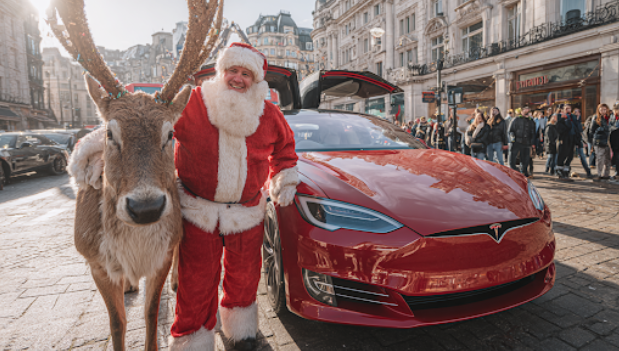
- Replacing reindeer with renewable-powered electric transport would save nearly 25,000 metric tons of CO2
- The Electric Car Scheme modelled emissions from Santa’s 160-million-kilometre festive journey
- Electric sleighs generate a fraction of the emissions associated with reindeer-powered travel
According to new calculations by The Electric Car Scheme, Santa has the potential to reduce his Christmas Eve carbon emissions by 24,880 metric tons of CO2 by retiring reindeer power in favour of an electric sleigh powered by renewable energy.
The analysis is based on Santa’s traditional overnight route, which spans approximately 160 million kilometres and is completed in just over a day as he travels the globe delivering presents.
At present, the reindeer-powered sleigh is estimated to produce around 33,200 metric tons of CO2 equivalent emissions. This figure includes methane emissions generated by reindeer, a greenhouse gas that is significantly more potent than carbon dioxide and greatly increases the overall environmental impact.
Transitioning to a renewable-electric sleigh would reduce emissions to an estimated 8,320 metric tons of CO2e. This 75% reduction provides a striking example of how electrification can dramatically lower emissions and reinforce the case for cleaner transport solutions.
The Electric Car Scheme’s comparative emissions analysis for the 160-million-kilometre journey:
Reindeer sleigh – 33,200 metric tons CO2e
Renewable Electric sleigh – 8,320 metric tons CO2e (75% reduction)
EU Electric mix sleigh – 10,080 metric tons CO2e (70% reduction)
Petrol sleigh – 22,880 metric tons CO2 (31% reduction)
Diesel sleigh – 27,680 metric tons CO2 (17% reduction)
While switching to petrol or diesel would reduce Santa’s carbon footprint, only electric-powered sleighs deliver the substantial environmental impact needed to meet net zero targets.
Thom Groot, CEO and co-founder of The Electric Car Scheme, commented:
“Santa’s journey is a useful illustration of why the switch to electric matters. Even using current European electricity grids, electric vehicles deliver 70% lower emissions than reindeer. But when you power them with renewables, you get a 75% reduction. This isn’t just about Christmas – it’s about how businesses and individuals across the UK can make meaningful environmental choices. Electric vehicles are already changing how we travel and reducing our carbon footprint.”
How electric vehicles compare across journeys.
Battery electric vehicles operating on the projected 2025 EU electricity mix produce approximately 63 grammes of CO2e per kilometre. Using renewable electricity, this figure drops to just 52 grammes per kilometre. In comparison, a medium petrol car emits 143 grammes of CO2 per kilometre, and a diesel car 173 grammes per kilometre.
The scale of difference becomes clear across longer journeys. Over 160 million kilometres – equivalent to more than 100,000 journeys from London to Sydney – the cumulative environmental benefit of switching to electric is substantial.